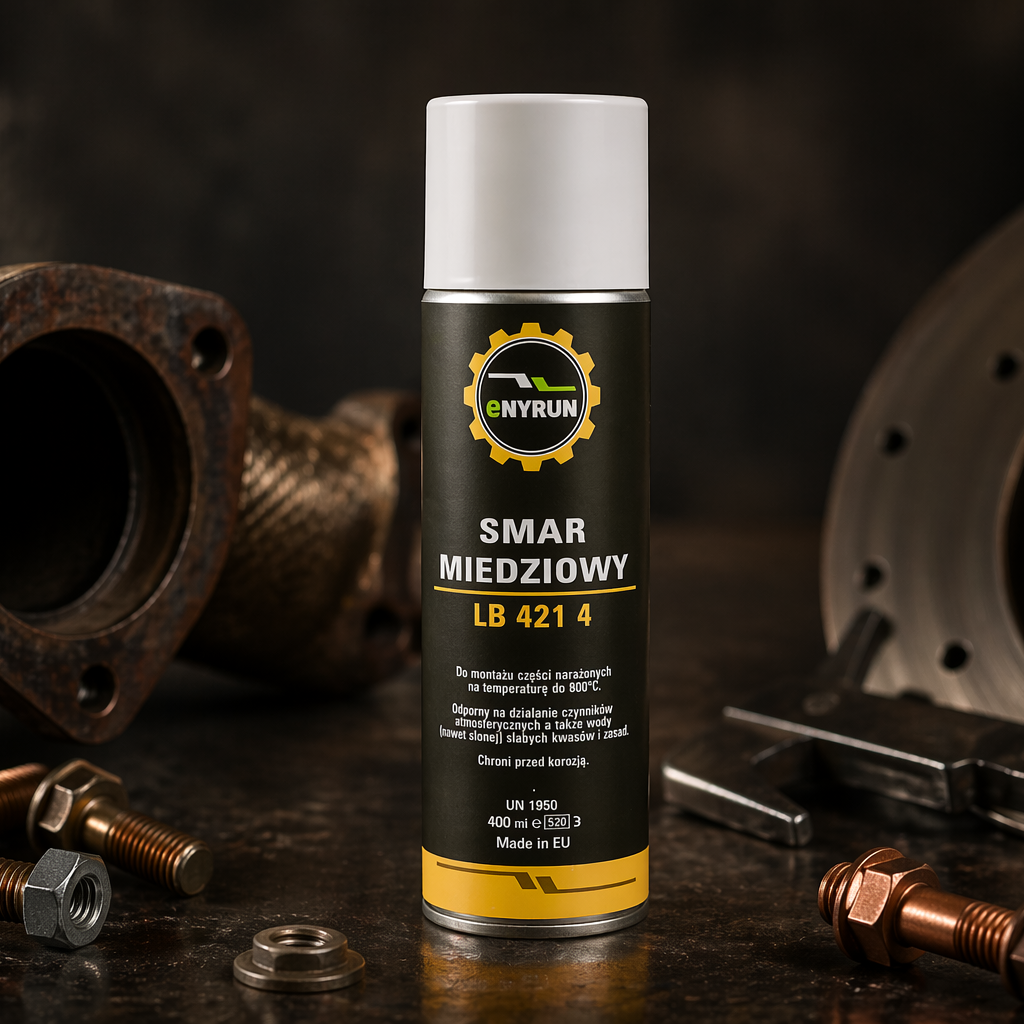
What is a copper anti-seize spray used for?
Copper lubricant combines a lubricating carrier with copper particles. Consult the particular product's technical data sheet for its operating range; a generic temperature rating for copper products must not be applied to every formulation.
A spray can help distribute product over accessible joint surfaces. Its operating-temperature rating does not permit spraying onto hot surfaces.
Where can it be considered in industrial maintenance?
For a high-temperature joint lubricant, assess the particular component rather than approving an entire machine. Examples requiring selection include:
- Suitable service joints associated with furnaces.
- Approved assembly points on presses.
- Suitable joints in foundry conveying equipment.
Check load, movement and temperature; an anti-seize product is not automatically a substitute for a bearing lubricant.
Other possible joint types require the same checks:
- Permitted hinges or fasteners on heating equipment.
- Threaded service connections on machinery.
- Suitable heating-system connections, subject to medium and material compatibility.
No general statement guarantees trouble-free disassembly after years of service.
What needs special care in automotive applications?
Before using copper anti-seize spray, check the vehicle or component procedure:
- Brakes: do not apply a generic recommendation to friction surfaces or guide pins. Use only the lubricant and locations expressly specified.
- Threaded fasteners: lubrication can affect tightening conditions. Do not apply to wheel fasteners or sensor threads without manufacturer instructions.
- Electrical connections: copper content alone does not establish suitability for a connector or battery terminal.
Safety-critical assemblies require their specific service instructions.
What benefits should be evaluated?
Evaluate adhesion, corrosion protection, resistance to washing off and future disassembly requirements against the actual product documentation. A numerical comparison with an unspecified lithium grease would not be reliable.
The ENYRUN copper lubricant is a candidate for appropriate joints, not a guarantee against every seizure or downtime event.
Where should copper lubricant not be used?
The ENYRUN product page excludes aluminium. Do not assume suitability for rubber, plastics, bearings, ABS-related components or electrical systems. A ceramic alternative must also be checked for the particular application.
How can ENYRUN help with selection?
Review the ENYRUN copper lubricant and provide the materials, temperature, joint type and assembly requirements. The older guide and product page give different temperature ranges; confirm the current technical sheet before specifying a limit.